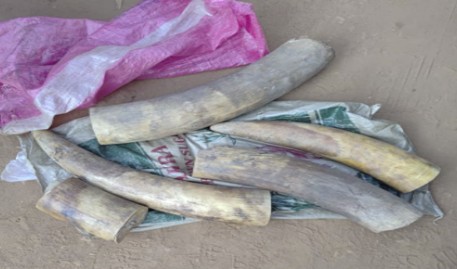
On March 14, 2026, a coordinated wildlife trafficking investigation unfolded just outside Kampala, Uganda, an operation that would once again demonstrate the power of partnerships in the fight against illegal wildlife trade.
Acting on intelligence received from the Uganda People’s Defence Force (UPDF), the Uganda Wildlife Crime Unit (UWCU) launched Operation Cabin, targeting individuals suspected of trafficking elephant ivory. With support from the Uganda Police Force (UPF), UWCU officers moved swiftly, resulting in the arrest of two traffickers and the seizure of 34 kilograms of elephant ivory.
The successful operation not only disrupted an active trafficking network but also ensured that those responsible will face justice. UWCU officers have filed charges and will continue to oversee the prosecution of the suspects, reinforcing Uganda’s commitment to holding wildlife criminals accountable.
Beyond the arrests and seizure, what makes Operation Cabin especially noteworthy is the teamwork behind it. The intelligence that sparked the investigation was not accidental, it came directly from relationships cultivated through ongoing collaboration and information-sharing between agencies. In fact, the key lead originated from connections formed during a joint task force meeting with the UPDF in Hoima in 2025.
This outcome highlights a key principle in combating wildlife trafficking: success is rarely achieved in isolation. It is built on trust, communication, and sustained cooperation among enforcement partners. The UWCU’s continued efforts to strengthen these relationships are proving instrumental in identifying threats, sharing intelligence, and ultimately disrupting criminal networks.
Operation Cabin stands as another example of how collaboration and proactive engagement can deliver real results for wildlife protection, ensuring that traffickers are stopped, and that the species they exploit have a fighting chance for survival.