Kampala, Uganda | May 24, 2025 — A coordinated law enforcement operation near Uganda’s capital city has resulted in the arrest of a ranking officer from a government agency found trafficking elephant ivory. The operation, a joint effort by Focused Conservation and the Uganda Wildlife Crime Unit (UWCU), highlights both the persistence of wildlife trafficking and the increasing risks to wildlife officers.
Acting on credible intelligence, the UWCU learned that a suspect in possession of 15 kilograms of elephant ivory was actively seeking a buyer in the Kampala area. During the preliminary investigation, it was determined that the trafficker was working for a Ugandan government agency, raising the operational risk level significantly for the field team.
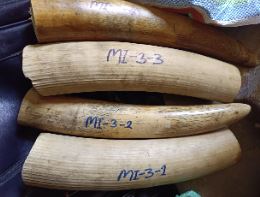
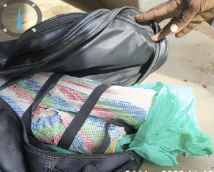
Given the sensitivity of the case, UWCU operatives devised a carefully planned approach. The decision was made to meet the suspect in a public park in Kampala, minimizing risk while allowing operatives to confirm the presence of ivory. During the meeting, the suspect arrived carrying a backpack, which operatives quickly confirmed contained four pieces of illegal elephant tusks.
Once the evidence was verified, the UWCU’s support team—along with officers from the Uganda Police and the Uganda Wildlife Authority—moved in and arrested the subject without incident. The ivory was seized and is now in secure custody, while the investigation continues.
Focused Conservation, which supports the UWCU with investigative training and technical assistance, praised the professionalism and courage of the team, especially given the sensitive nature of arresting an individual in a position of authority.
Elephants remain under severe threat across Africa, with poaching and illegal ivory trade driving declines in populations and disrupting fragile ecosystems. Operations like this are critical to ending the trade and protecting these iconic species.
The suspect is currently in custody and is expected to face prosecution under Uganda’s wildlife laws. The investigation remains ongoing as authorities work to identify possible accomplices and connections to larger trafficking networks.